Showing posts with label John McCain. Show all posts

Monday, March 14, 2011

All things to all people, and nothing definite to anyone

In thinking about "Campaigning as All Things to All Republicans," the article about former Minnesota governor Tim Pawlenty's nascent Republican presidential candidacy in today's New York Times, one should be heartened, first, by the fact that it occurred to anyone at the Times to make a Biblical reference, even obliquely, by invoking a phrase from St. Paul's first Epistle to the Corinthians, chapter 9, verse 22. Indeed, I imagine that the article was written by someone about my age, who may have been quizzed by a younger copy editor: "Interesting turn of phrase--where did you come up with it?"


Pawlenty is amiable and intelligent and is who I thought Senator McCain would choose before McCain began to demonstrate, rather embarrassingly, the truth of the adage that hope deferred makes the heart sick, and made some embarrassing choices.

Pawlenty's own choices this electoral season are not easy ones, though he should realize the extent to which he sounded a cautionary note for his own candidacy when he uttered this home truth:
“I think the people who get tossed around in this process are people who don’t have their compass set, who don’t have their feet firmly planted on the ground. And then they start to just grab for the wind and they flop around."

Indeed.

And granted that Pawlenty doesn't have a Michael Bloomberg fortune, his visits to New Hampshire were not thought experiments or philosophical exercises but, presumably, early tests of strategies to garner votes. Accordingly, as the Times tells us:
"At a recent Tea Party Patriots rally, he pronounced, 'The government’s too damn big!' To an evangelical audience, he declared, 'The Constitution was designed to protect people of faith from government, not to protect government from people of faith.' And to Republicans in New Hampshire, he closed with a gentle plea: 'Please leave with hope and optimism.'”

Nothing wrong with making potential supporters feel at home, I suppose. But I can't help but wonder if the estimable former governor might be on more solid ground—philosophically, at least—if he had something like the following to his respective constituencies:

To the Tea Party: "At some point, you need to make up your mind if you want the central government provided by the United States Constitution or the toothless mockery of national government that existed under the Articles of Confederation. The Founding Fathers understood the difference. Do you?"

To Evangelicals: "The first instrument of government in North America did, indeed, begin with the words 'In the name of God, amen.' It was the Mayflower Compact. It was sufficient to organize a small settlement in a day when men literally believed in witches; it was not a suitable foundation on which to build an entire nation made up of people of many widely varying beliefs. Our Constitution is a product of the age of the Enlightenment, not the age of Jonathan Edwards or Cotton Mather. It is important to know the difference and act on it."

To the New Hampshire Republicans: "Please leave with hope and optimism, but only after realizing that the only sound basis of such is to reject the know-nothingness that threatens to hijack the party of Lincoln and Teddy Roosevelt."
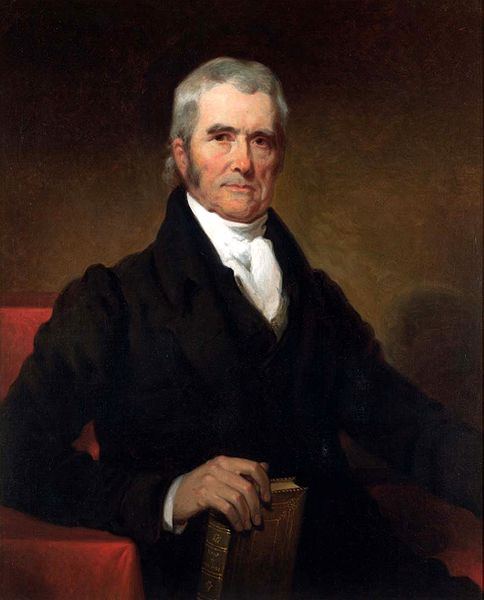

Now that would make for an interesting candidacy, even though, in today's political climate, it might well be over almost before it started. And then Mr. Pawlenty could go home and read Albert J. Beveridge's biography of John Marshall or Marshall's biography of Washington.

© Michael Huggins, 2011. All rights reserved.

Monday, December 29, 2008

Brokeback or bareback?

From an article posted Friday in Slate, I learn that two names that were googled this year with a frequency matching Sarah Palin and John McCain were Heath Ledger and Miley Cyrus. Ledger I can understand, and I hope he gets a posthumous Oscar for his performance in The Dark Knight, which was simply amazing; as to the other search object, I'd certainly rather gaze on a pretty young woman, even chastely, than on McCain any day—but Miley Cyrus? Who is she and why should anyone outside her friends and family be interested in her? Two years ago, her name was an item that I included on a list of practice questions for my office trivia team; now, tickets to her performances are scalped.

Her notoriety this year came from the Annie Leibovitz photos in Vanity Fair, and if viewers of the pictures took exception to Leibovitz tastelessly posing Cyrus with her boneheaded father in ways that looked like boyfriend and girlfriend, I agree. It seems there are times when no one has less common sense than artists, as Peter Lynch showed, for instance, when he filmed the humiliating near-rape scene between Willem Dafoe and Laura Dern in Wild at Heart and called it "An episode of female empowerment" (I won't say "Hand me a barf bag" because that motif was another element all too evident in the film). But what got everyone searching for Miley was a single shot that revealed no more than my then-14-year-old daughter did when she donned her new Speedo and went swimming a few years ago: a bare back. Of course society must reject the prurient exploitation of minors, but the last time I checked, shoulder blades were not secondary sexual characteristics, nor their display pornographic.

It's ironic—in April, touring a restored mansion in the annual "pilgrimage" of ante-bellum homes in nearby Holly Springs, Mississippi, I was startled to see several photographs, in one room, of what I assume was the owner's 12-year-old granddaughter in various states of undress, though the photos were very tastefully posed and could not be taken as pornographic. For that matter, on another historic homes tour a year or two ago, passing through some private family rooms, I came across a nude oil portrait of a young woman, and a moment later, found myself face to face with the original (dressed, of course), trying to contain her amusement at the startled glances of the guests. Cyrus's photo is pretty tame compared to those instances, and it seems the feverish interest is based on "concern" over what might have happened had she not adequately draped herself; frankly, it's all beginning to sound to me like John Ashcroft veiling the statues in the lobby of the Justice Department. Let little 15-year-old Destiny Hope do her television show and worry about dating and leave the rest of us to recollect ourselves and consider when our fixation on a young woman's bare back reflects things about our own thoughts that we'd just as soon not reveal.

© Michael Huggins, 2008. All rights reserved.

Thursday, December 4, 2008

Color me spiritual

When will the President-elect and Mrs. Obama entertain Sidney Poitier, Bill Cosby, and Morgan Freeman at the White House? He owes a great deal to all three. His gifts and achievements are his own, and he ought to have won his office without reference to race, but racial prejudice made it necessary for these men to quietly assure fearful whites for years that African-Americans were reasonable and civilized and that your well-spoken black dinner guest would not suddenly cast away his necktie and begin an orgiastic dance on your coffee table. (When I Spy aired, National Review honored Cosby with the label, "Super Spade.") Of course, prejudice lingers still, as Memphis journalist Wendi C. Thomas sardonically noted with her pre-election column in TheRoot.com, “Will White People Riot [if McCain loses]?”

When, for that matter, will Obama invite comedian Dick Gregory who, after all, preceded the President-elect's successful campaign with his own White House bid 40 years ago? I remember listening to a recording of a Gregory routine around 1966, in which he described his fantasy of moving to a suburb and "raking the snow" while dressed in a jacket and tie, in order to be accepted by his white neighbors. Talking of his proposed residence in the White House, Gregory imagined himself answering phone calls to the Executive Mansion with a laid-back "Hey, baby!" He never got to move in, but in any case, would probably have avoided the burden about to descend on Obama, yet another subtle manifestation of race prejudice, the black man as wise spirit guide to confused and benighted whites. Bijan C. Bayne describes the phenomenon in another perceptive and provocative piece in TheRoot, "Magical Negro in Chief":

...there is something dizzying about the heights of Obama's other-worldly pedestal. And—if he continues to follow another narrative arc laid out in popular culture—the depths to which he will inevitably fall. Will this character rescue the world in the end? Or will he become consumed by an unseen, dark inner soul?

In the coming years, we will know soon enough. Until then, we can only look at the clues laid out in popular culture.

Negro Spirit Guides, magical helpers who have little interior life of their own, says E. Ethelbert Miller, literary archivist and director of the African-American Studies Resource Center at Howard University. "Their duty is to serve (whites) and to serve well. The hero of the movie often 'embraces' their blackness and comes to grips with the unknown."

Placing a feared "other" on a pedestal is of course a well-known technique for circumscribing his or her role, with a long history: men used it on women, and whites on blacks of both genders. Bayne continues:

There is a colonial tinge to this Negro Spirit Guide phenomena, according to Regina Longo, a University of California Santa Barbara film and media studies professor. Starting in the 19th century Romantic era, the spirit guide became "a way for white colonists to acknowledge a certain type of black power that is safe for the whites, that still keeps the blacks as something other than wholly human even if they are divine," Longo said. "The religion of that era said that we are all God's creatures, no matter our rung on the evolutionary ladder. That helps the whites to assuage their guilt over the institutions of slavery and racism, but rather than letting go of them, they institutionalize them through culture."

To be sure, some reasons for expecting great things of Obama are obvious. He is poised, thoughtful, articulate (and clean, as his Vice-President-to-be observed!), intelligent, prudent, pragmatic, but with principles, though his fortitude and tenacity in maintaining those principles against both Congressional barons and foreign despots have yet to be tested. And yes, we are entitled to expect capability, energy, wisdom, and sound governance, but from a mortal, not a Savior. Anyone too caught up in the current euphoria might do well to remember an example cited by Montaigne:

"The poet Hermodorus had written a poem in honour of Antigonus, wherein he called him the son of the sun: "He who has the emptying of my close-stool," said Antigonus, "knows to the contrary."

Meanwhile, beleaguered GM executives seem desperately bereft of spirit guides of any complexion; the Sun may be setting on Saturn, whose 1990 rollout was also supposed to represent "Change you can believe in." Apparently, some in GM and UAW alike really did believe:

True believers in Saturn insist the concept behind the division, which stressed respect, teamwork and communication from the factory floor to the auto showroom, could have kept G.M. from losing nearly half the market share it held when the first Saturns went on sale 18 years ago.

“I’m absolutely convinced that the Saturn way could have worked,” said Michael Bennett, the original U.A.W. leader at Saturn. “But what we had was never embraced or adopted.”

This year, Saturn sales will fall below 200,000 units for the first time since 1992 (sales have never achieved the half-million-unit annual volume that GM hoped for). Meanwhile, The New York Times reports that "General Motors has promised Congress that it can recreate itself as a different kind of car company — smaller, with a more cooperative relationship with its union, and a lineup of fuel-efficient cars to compete with the best of the foreign brands." But that is what was supposed to happen with Saturn! GM executives are hinting at "looking at alternatives"; Congress needs to do the same.

© Michael Huggins, 2008. All rights reserved.